Samsung washer instruction books are vital for optimal performance and longevity; they detail installation, operation, and troubleshooting steps for your appliance.
Importance of the Manual
A Samsung washer instruction book is far more than just a guide; it’s the key to unlocking your appliance’s full potential and ensuring years of reliable service. Ignoring the manual can lead to improper usage, potentially damaging the machine or voiding the warranty.
Detailed installation instructions prevent errors, while operating guidelines maximize washing efficiency. Crucially, the manual provides vital troubleshooting steps for common issues, potentially saving costly service calls.
Furthermore, service manual information, as found on platforms like Reddit (r/appliancerepair), offers complete disassembly instructions – invaluable for advanced repairs. Understanding your washer through its manual empowers you to maintain it effectively and address problems confidently.
Where to Find Your Samsung Washer Manual
Locating your Samsung washer manual is often surprisingly straightforward. Begin by checking inside the washer itself – Reddit users confirm some models store a manual behind the rear cover. Online resources are plentiful; the Internet Archive offers downloadable Samsung washing machine user and service manuals in PDF format.
Samsung’s official website is another excellent source, allowing searches by model number. If you’ve misplaced the physical copy, a digital version can be readily obtained.
Additionally, third-party sites like ManualsLib may host copies, and sometimes a small fee (around $20 CDN with discounts, as noted online) is required for detailed service manuals.
Understanding Your Washer’s Components
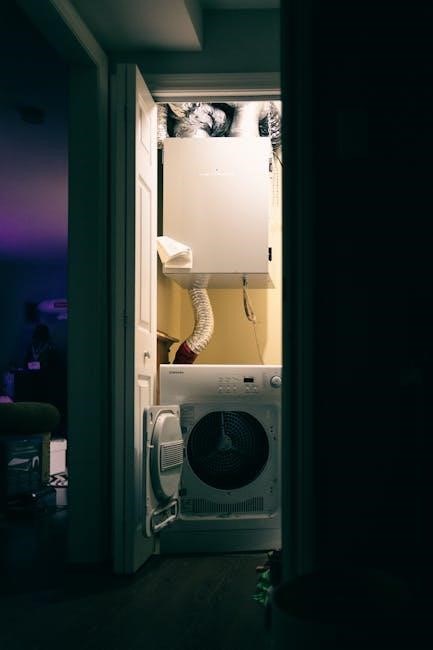
Samsung washer components include the control panel, drum, water inlet/drain hoses, and detergent dispenser – all detailed within your instruction book for proper use.
Control Panel Overview
The Samsung washer control panel is your command center, featuring a digital display and various buttons or a dial to select wash cycles, adjust settings, and monitor progress. Understanding each function is crucial for effective operation. Commonly found controls include power, start/pause, cycle selection (like Normal, Heavy Duty, Delicate), temperature settings (hot, warm, cold), spin speed options, and specialized cycles like Quick Wash or Sanitize.
Additional features may encompass delay start, child lock, and options for extra rinse or soil level adjustments. Your Samsung washer instruction book provides a detailed diagram and explanation of each control, ensuring you can customize washes to suit your laundry needs. Familiarizing yourself with the panel’s layout will streamline your laundry routine and prevent accidental settings.
Washer Interior – Drum and Features
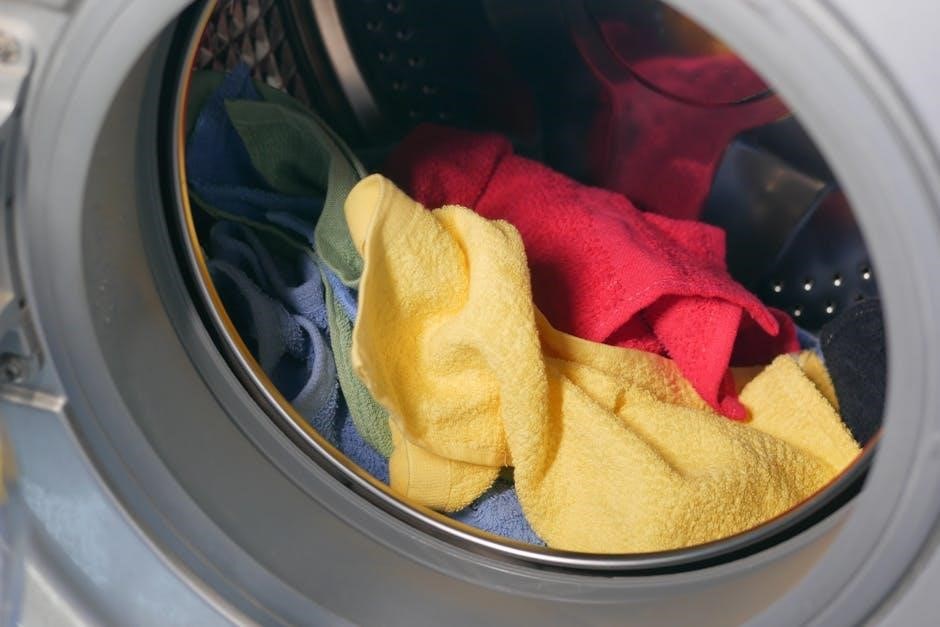
The Samsung washer’s interior centers around the drum, typically stainless steel, designed to gently yet effectively clean your clothes. Key features often include a self-cleaning cycle to maintain hygiene, and sometimes, a steam function for enhanced stain removal. Look for features like a pulsator or impeller at the base of the drum, which creates water movement for thorough washing.
Your Samsung washer instruction book will detail the drum’s capacity and any specific care instructions. Pay attention to any internal lighting or special compartments for additives. Understanding these features, as outlined in your manual, will help you maximize cleaning performance and protect your garments.
Water Inlet and Drain Hose Connections
Proper connection of water inlet and drain hoses is crucial for your Samsung washer’s operation. Your Samsung washer instruction book provides detailed diagrams illustrating how to connect the hot and cold water supply lines to the back of the machine, ensuring a secure, leak-proof fit.
The manual will also guide you on correctly positioning the drain hose into a standpipe or laundry tub, preventing backflow and ensuring efficient water removal. It’s vital to check for kinks or obstructions in both hoses. Following these instructions minimizes the risk of water damage and ensures optimal washer performance.
Installation Guide
Samsung washer instruction books detail unpacking, location selection, and shipping bolt removal for a secure setup, ensuring proper functionality and preventing damage.
Unpacking and Initial Setup
Carefully unpack your Samsung washer, inspecting for any shipping damage before proceeding. Retain all packaging materials until you’ve confirmed the appliance functions correctly. The instruction book guides you through removing protective films and securing any loose components.
Initial setup involves verifying all included parts – hoses, drain pipe, and accessories – are present. Consult the manual for a detailed parts list. Before connecting utilities, ensure the washer is positioned on a level surface. Improper leveling can cause excessive noise and vibration during operation.
The Samsung washer instruction book emphasizes the importance of reading all safety precautions prior to installation and use, safeguarding against potential hazards. Following these steps ensures a smooth and trouble-free start with your new appliance.
Selecting a Suitable Location
The Samsung washer instruction book stresses choosing a location that provides adequate ventilation and access for maintenance. Avoid areas prone to freezing temperatures, as this can damage water lines and internal components. A level, solid floor is crucial to minimize vibrations and noise during operation.
Ensure sufficient space around the washer for hose connections and door opening. The manual specifies minimum clearances to prevent kinking of hoses or obstruction of the door. Proximity to both water supply and drain is essential for convenient installation.
Avoid placing the washer in direct sunlight or near heat sources, as this could affect its performance and lifespan. The instruction book details these considerations for optimal placement;
Removing Shipping Bolts
The Samsung washer instruction book emphatically states that shipping bolts must be removed before operation. These bolts secure the drum during transport, preventing damage, but will cause severe vibration and noise if left in place. The manual provides clear diagrams illustrating the bolt locations – typically on the rear of the washer;
Use the provided wrench (or a suitable alternative) to carefully loosen and remove each bolt. Retain these bolts for future transport if you ever need to move the appliance. Failure to remove them voids the warranty and risks catastrophic damage to the washer.
The instruction book also details filling the bolt holes with the provided caps to maintain the washer’s structural integrity.

Operating Instructions
Samsung washer instruction books guide users through proper loading, detergent usage, cycle selection, and customized settings for optimal cleaning performance and fabric care.
Loading the Washer Correctly
Proper loading is crucial for effective cleaning and preventing damage to both your clothes and the Samsung washer. Instruction books emphasize not overloading the drum; leave ample space for items to move freely during the wash cycle.
Distribute the load evenly to maintain balance and minimize vibration. Avoid wrapping items around the drum, as this can strain the machine. Separate delicate items and place them in a mesh laundry bag for protection.
Check pockets for objects like coins or keys before loading. Follow the manual’s guidance on load size based on the fabric type and cycle selected. Overloading reduces cleaning efficiency and can lead to wear and tear on the washer’s components.
Detergent Dispenser Guide
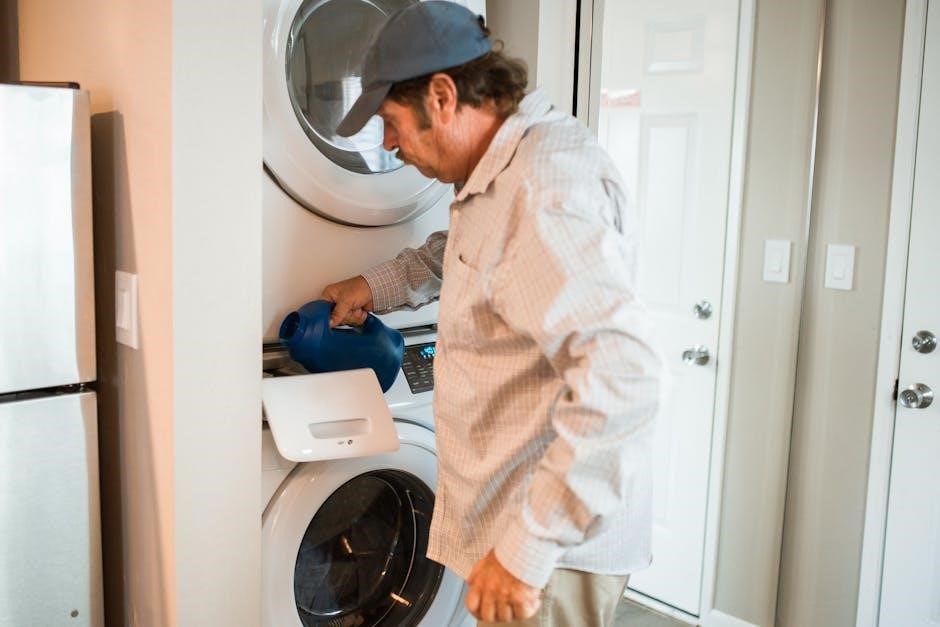
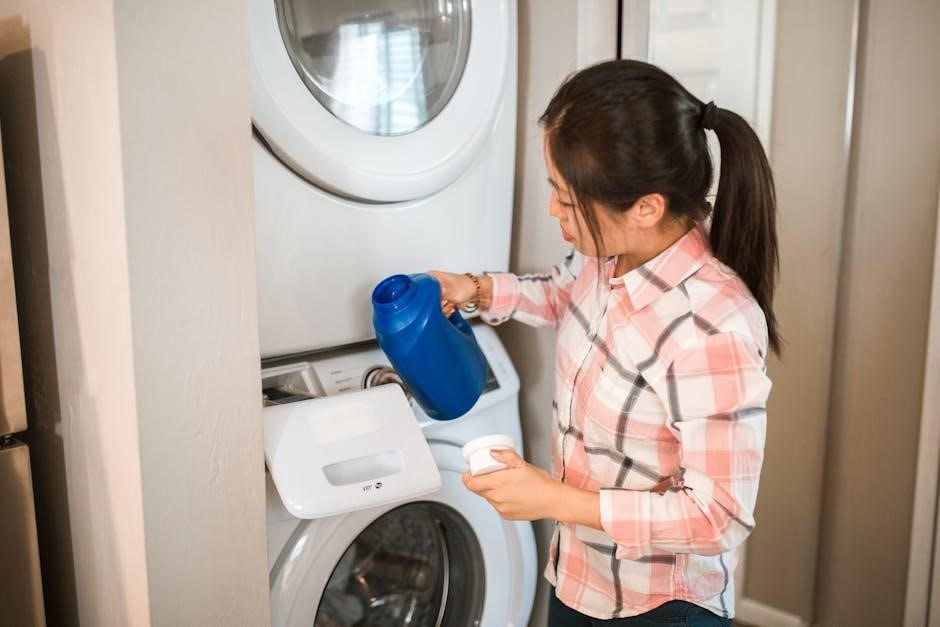
Samsung washer instruction books provide detailed guidance on utilizing the detergent dispenser correctly. Typically, dispensers feature compartments for detergent, fabric softener, and bleach – always check your model’s specific layout.
Use only HE (High Efficiency) detergent, as standard detergents create excessive suds that can damage the machine. Fill compartments to the indicated maximum fill lines; overfilling can cause residue buildup.
Liquid detergent usually goes in the designated compartment, while powdered detergent may have a separate tray. Refer to the manual for proper placement and timing of detergent release during the wash cycle. Regularly cleaning the dispenser prevents clogs and ensures optimal performance.
Cycle Selection and Settings
Samsung washer instruction books thoroughly explain each wash cycle and available settings. Common cycles include Normal, Delicate, Heavy Duty, Quick Wash, and Bedding. Understanding these options is crucial for effective cleaning and fabric care.
Settings like water temperature, spin speed, and soil level allow for customization. Hot water is best for whites and heavily soiled items, while cold water preserves colors and delicate fabrics. Higher spin speeds extract more water, reducing drying time.
Refer to the manual for recommended cycles and settings for specific fabric types and laundry needs. Utilizing the correct combination ensures optimal cleaning performance and prevents damage to your clothes.
Troubleshooting Common Issues
Samsung washer instruction books provide guidance on resolving frequent problems like starting failures, leaks, and error codes, ensuring efficient operation.
Washer Won’t Start
If your Samsung washer fails to start, the instruction book advises checking the power cord connection and the outlet’s functionality first. Ensure the door is securely latched, as a safety interlock prevents operation if it’s ajar.
Consult the manual for specific error codes displayed on the control panel, as these pinpoint the issue. A tripped circuit breaker or blown fuse should also be investigated. The Samsung washer instruction book details how to reset the machine, potentially resolving minor electrical glitches.
Furthermore, it guides users through verifying the water supply valves are fully open, as insufficient water pressure can hinder startup. If problems persist, the manual recommends contacting Samsung support, referencing the model number for assistance.
Leaking Water
If you notice water leaking from your Samsung washer, your instruction book stresses immediate attention to prevent damage. First, inspect the water inlet hoses and drain hose connections for tightness and cracks; the manual illustrates proper connection techniques.
Check the door seal for obstructions or damage, as this is a common leak point. The Samsung washer instruction book details how to clean and inspect the seal effectively. Overloading the washer can also cause leaks, so adhere to recommended load sizes.
If the leak persists, consult the manual’s troubleshooting section for specific error codes related to drainage issues. If unable to resolve, contact Samsung support, providing the model number for accurate guidance.
Error Codes and Their Meanings
Your Samsung washer instruction book provides a comprehensive list of error codes, crucial for diagnosing issues. These codes, displayed on the control panel, indicate specific problems ranging from water supply issues (like 5E or 5C) to drainage malfunctions (such as 5E1 or 8E).
The manual details each code’s meaning and suggests potential solutions, like checking the water inlet valve or clearing a drain pump obstruction. Understanding these codes empowers you to attempt simple fixes before calling a technician.
Referencing the Samsung washer instruction book’s error code section saves time and potentially costly service calls. Always note the complete error code for accurate troubleshooting.
Maintenance and Care
Samsung washer instruction books emphasize regular cleaning of the drum, dispenser, and filter to maintain peak performance and prevent odors or malfunctions.
Cleaning the Washer Drum
Maintaining a clean washer drum is crucial for preventing mildew, odors, and residue buildup, as detailed in your Samsung washer instruction book. Regularly, typically monthly or every few washes, perform a cleaning cycle using a washing machine cleaner specifically designed for front-load or top-load washers, depending on your model.
Alternatively, you can use a solution of white vinegar and baking soda. Pour two cups of white vinegar into the detergent dispenser and sprinkle half a cup of baking soda directly into the drum. Run a hot water cycle on the highest setting.
After the cycle completes, wipe down the drum with a clean, damp cloth. The Samsung washer instruction book may also recommend leaving the door ajar after each wash to allow for proper ventilation and prevent moisture accumulation, further inhibiting mildew growth.
Cleaning the Detergent Dispenser
Your Samsung washer instruction book emphasizes the importance of regularly cleaning the detergent dispenser to prevent clogs and ensure optimal detergent distribution. Residue from liquid and powder detergents can accumulate, leading to performance issues and potential mold growth.
Typically, the dispenser drawer can be removed by pressing a release button or latch. Once removed, rinse all compartments thoroughly under warm running water, using a soft brush to dislodge any stubborn residue. Pay close attention to the fabric softener compartment, as this is prone to buildup.
Ensure all parts are completely dry before reinserting the dispenser drawer. The Samsung washer instruction book may suggest a more frequent cleaning schedule if you use liquid fabric softener regularly.
Filter Cleaning Procedures
The Samsung washer instruction book details crucial filter cleaning procedures to maintain peak washing performance and prevent drainage issues. Located typically at the bottom front of the machine, behind a small access panel, the filter traps lint, hair, and small objects.
Before cleaning, always unplug the washer! Place a towel or shallow pan to catch any residual water. Carefully unscrew and remove the filter cover, then gently pull out the filter. Rinse the filter thoroughly under running water, removing all debris.
Inspect the filter housing for any obstructions and clean as needed. Reinstall the filter securely and close the access panel. Your Samsung washer instruction book recommends cleaning the filter periodically, depending on usage.

Disassembly Instructions (Service Manual Information)
Samsung washer instruction books, or dedicated service manuals, provide detailed disassembly guidance, including locating the manual inside the washer’s rear cover.
Accessing Internal Components
Accessing the internal components of your Samsung washer requires careful attention to detail and, ideally, a service manual. Disassembly should only be undertaken by individuals comfortable with appliance repair, as improper handling can cause further damage or safety hazards. The service manual, often available for purchase online (approximately 20 CDN with discounts), provides step-by-step instructions and diagrams.
Typically, gaining access involves removing the outer cabinet panels, often secured with screws located at the rear and potentially underneath the washer. Once the panels are removed, you’ll be able to view and access key components like the motor, pump, and control board. Remember to disconnect the power supply before beginning any disassembly process. Always refer to the manual for specific component locations and removal procedures for your particular Samsung washer model.
Locating the Existing Manual Inside the Washer
Surprisingly, many Samsung washing machines conceal a duplicate, simplified manual within the appliance itself! This is a helpful backup if the original documentation is misplaced. According to reports from online appliance repair communities, like those on Reddit (r/appliancerepair), this secondary manual is typically found inside the rear cover of the washer.
Accessing this hidden manual requires removing the rear panel, which usually involves unscrewing several fasteners. While not as comprehensive as the full service manual (available for around 20 CDN), it can provide essential information for basic troubleshooting and understanding of the washer’s operation. It’s a clever feature designed to assist owners even without the original paperwork.