
Essential procedures, including pump down, vacuum testing, and recovery techniques, are detailed in comprehensive guides like Migliaccio’s dedicated paperback for HVACR professionals.
Importance of Proper Refrigerant Charge
Maintaining the correct refrigerant charge is paramount for optimal air conditioning and heat pump system performance. Both overcharging and undercharging significantly reduce efficiency, leading to increased energy consumption and higher operating costs. Accurate charging, as detailed in resources like Craig Migliaccio’s guide, ensures the system operates within its designed parameters.
Improper charge levels can also cause compressor failure, a costly repair. Simulation codes, as referenced in research papers, demonstrate how charge impacts efficiency. Proper procedures, including superheat and subcooling measurements, are crucial. Furthermore, understanding the specific refrigerant type – R-22, R-410A, or R-32 – is vital for correct charging, as outlined in service manuals and training materials.
Safety Precautions When Handling Refrigerants
Refrigerant handling demands strict adherence to safety protocols. Always wear appropriate personal protective equipment, including eye protection and gloves, to prevent contact with the substance. Proper ventilation is crucial, as some refrigerants can displace oxygen. Recovery machines are essential for safely removing refrigerant from systems, preventing its release into the atmosphere – a key environmental concern.
Ensure recovery bottles are used correctly and not overfilled. Utilizing thread sealant like Nylog Blue on hose connections minimizes leak risks during evacuation and charging. Familiarize yourself with environmental regulations regarding refrigerants, as improper handling can lead to fines and environmental damage. Comprehensive training, as emphasized in HVACR resources, is vital for safe and responsible refrigerant service.
Tools and Equipment for Refrigerant Service
Essential tools include manifold gauge sets, vacuum pumps, recovery machines, and leak detectors, alongside thread sealants like Nylog Blue for secure connections.
Refrigerant Manifold Gauge Sets
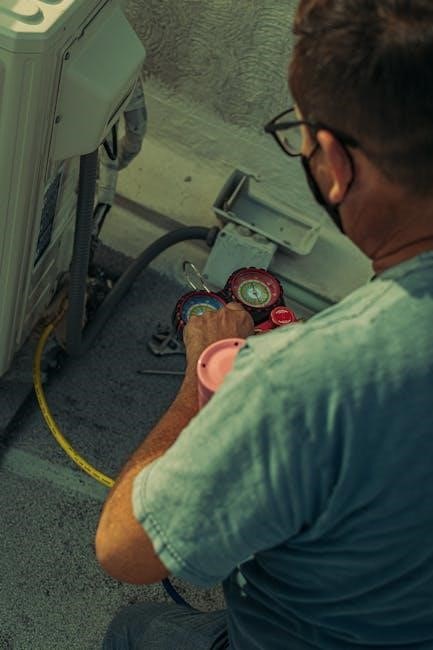
Refrigerant manifold gauge sets are fundamental for accurate system diagnosis and service. These sets, coupled with hoses, establish vital connections to service valves, enabling technicians to monitor high and low-side pressures during charging and recovery processes. Proper hose connections are crucial, and utilizing a thread sealant like Nylog Blue ensures leak-proof operation during evacuation and charging.
Understanding service valve positions and port access is paramount for efficient operation. Gauges provide critical data for determining superheat and subcooling, essential for precise refrigerant charge calculations. Migliaccio’s guide emphasizes correct manifold gauge set and hose connections as a foundational skill for any HVACR technician. Accurate readings are the cornerstone of effective refrigerant service, preventing both undercharge and overcharge conditions.
Vacuum Pumps and Accessories
Achieving a deep vacuum is a critical step before refrigerant charging, removing both moisture and non-condensables from the system. High-quality vacuum pumps, alongside accessories like vacuum hoses and micron gauges, are essential for this process. Following a thorough vacuum, a ‘standing vacuum test’ verifies system integrity, confirming the absence of leaks.
Migliaccio’s procedures detail the importance of proper vacuuming techniques. A successful vacuum ensures optimal system performance and prevents premature component failure. Accessories aid in achieving the necessary vacuum levels, and leak tightness is paramount. The PDF resources highlight vacuuming as a foundational element of effective refrigerant service, directly impacting system efficiency and longevity.
Refrigerant Recovery Machines
Proper refrigerant recovery is crucial for environmental protection and regulatory compliance. Recovery machines safely extract refrigerant from systems before service or disposal, preventing its release into the atmosphere. Migliaccio’s procedures emphasize responsible handling and adherence to EPA guidelines. Utilizing a recovery machine is a fundamental aspect of modern HVACR service.
The PDF resources detail recovery techniques and proper recovery bottle use. These machines are designed to capture refrigerant in a contained environment, allowing for potential recycling or responsible disposal. Effective recovery minimizes environmental impact and ensures technicians meet legal requirements. Skilled technicians understand the importance of recovery for both ecological and professional reasons.
Leak Detectors
Accurate leak detection is paramount in refrigerant service, preventing charge loss and ensuring system efficiency. Identifying leaks promptly minimizes environmental impact and costly refrigerant refills. Procedures detailed in resources like Migliaccio’s guide emphasize systematic leak checking as part of comprehensive troubleshooting.
Various leak detection methods exist, from electronic detectors to soap bubble solutions. Electronic detectors offer sensitivity and pinpoint accuracy, while traditional methods remain valuable for larger leaks. Proper use of these tools, alongside thread sealant like Nylog Blue Gasket, is vital. Effective leak detection is a core skill for any HVACR technician, ensuring system integrity and responsible refrigerant management.
Nylog Blue Gasket ⎯ Thread Sealant
Nylog Blue Gasket is a crucial component in ensuring leak-free connections during refrigerant servicing. Derived from refrigeration-grade lubricants, a single drop applied to rubber hose gaskets before attaching core tools, hoses, or vacuum gauges prevents binding and leakage during evacuation procedures. This simple step, highlighted in service guides, significantly improves connection reliability.
Using Nylog minimizes the risk of refrigerant escape, contributing to environmental protection and system performance. It’s a preventative measure emphasized in comprehensive training materials and practical guides for HVACR technicians. Proper application, alongside diligent torqueing of fittings, is essential for maintaining system integrity and adhering to best practices in refrigerant handling.
Understanding Refrigerant Types
Common refrigerants like R-22, R-410A, and R-32 require specific charging procedures, detailed in service manuals, due to differing properties and environmental regulations.
Common Refrigerant Types (R-22, R-410A, R-32)
R-22, a historically prevalent refrigerant, is now phased out due to its ozone depletion potential, necessitating proper recovery procedures as outlined in service guides. R-410A emerged as a common replacement, demanding different charging pressures and techniques detailed in resources like Migliaccio’s book.
More recently, R-32 has gained traction for its lower global warming potential, but requires specialized equipment and knowledge for safe handling and accurate charging. Understanding the unique properties of each refrigerant – pressure-temperature relationships, compatibility with system components, and environmental impact – is crucial.
Proper identification and handling, as emphasized in HVAC training materials, prevent system damage and ensure compliance with evolving environmental regulations. Resources detail specific charging charts and procedures for each refrigerant type, vital for optimal system performance and longevity.
Refrigerant Properties and Characteristics
Refrigerant characteristics, like boiling point, vapor pressure, and heat absorption capacity, directly impact system efficiency and charging requirements. Understanding these properties is fundamental, as detailed in comprehensive service manuals. Different refrigerants exhibit varying levels of flammability and toxicity, demanding strict safety protocols during handling and recovery, as emphasized in training materials.
Oil miscibility is another critical factor; proper refrigerant-oil mixture ensures adequate lubrication and prevents compressor damage. Resources like Migliaccio’s guide highlight the importance of selecting the correct oil type for each refrigerant.
Furthermore, superheat and subcooling values, indicators of refrigerant state within the system, are crucial for accurate charge determination. Mastering these concepts, as presented in HVAC school curricula, is essential for effective troubleshooting and optimal system performance.
Environmental Regulations Regarding Refrigerants
Strict environmental regulations govern refrigerant handling due to their ozone depletion potential (ODP) and global warming potential (GWP). Proper refrigerant recovery and recycling are mandated to minimize atmospheric release, as detailed in industry best practices and legal frameworks.
The phase-out of R-22, a common refrigerant, exemplifies these regulations, prompting a transition to more environmentally friendly alternatives like R-410A and R-32. Technicians must be certified to handle these substances, demonstrating knowledge of recovery procedures and leak prevention.
Resources like HVAC school training programs and service manuals emphasize compliance with EPA Section 608 standards. Improper venting of refrigerants carries significant penalties. Responsible refrigerant management is crucial for environmental sustainability and adherence to legal requirements.

Refrigerant Charging Procedures
Migliaccio’s guide details step-by-step procedures for preparing systems, performing vacuum tests, and employing both static and subcooling charging methods effectively.
Preparing the System for Refrigerant
Before introducing refrigerant, meticulous system preparation is crucial for optimal performance and longevity. Craig Migliaccio’s resource emphasizes the importance of understanding service valve positions and port access, ensuring proper connections. This involves verifying all electrical connections are secure and the system is free from air and non-condensables.
Proper preparation also includes a thorough inspection for leaks and addressing any identified issues before proceeding. The system must be mechanically sound, with all components functioning correctly. Furthermore, ensuring the system is adequately evacuated—a process detailed in the referenced procedures—is paramount. This step removes moisture and contaminants that can severely compromise system efficiency and potentially cause damage. Careful attention to these preparatory steps sets the stage for a successful and reliable refrigerant charge.
Pump Down Procedures
Pump down procedures, as outlined in resources like Migliaccio’s guide, are vital for recovering refrigerant from the high-side of the system before opening lines for service. This minimizes refrigerant loss to the atmosphere and allows for component servicing without depressurizing the entire system. The process involves running the compressor until the suction pressure reaches a predetermined low level, typically near zero inches of mercury.
This ensures most of the refrigerant is condensed and resides in the liquid receiver or condensing unit. Proper pump down also aids in preventing oil from being trapped in the high side, facilitating oil return to the compressor during subsequent operation. Following established procedures, detailed in dedicated HVACR texts, is essential for safe and efficient refrigerant management.
Vacuuming the System and Standing Vacuum Test
Thoroughly vacuuming the system, a key procedure detailed in comprehensive guides, removes non-condensables like air and moisture, crucial for optimal performance and preventing acid formation. This is achieved using a vacuum pump and manifold gauge set, drawing a deep vacuum – typically below 500 microns.
Following evacuation, a “standing vacuum test” is performed. The system is isolated from the pump, and the vacuum level is monitored for a specified period (often 30-60 minutes). A rising vacuum reading indicates leaks, requiring identification and repair before refrigerant charging. Migliaccio’s work emphasizes the importance of this test for ensuring system integrity and longevity.
Calculating Proper Refrigerant Charge
Determining the correct refrigerant charge is vital for system efficiency and longevity. While equipment nameplates often provide charge amounts, these serve as starting points. Accurate calculation often requires considering factors like line length, superheat, and subcooling. Simulation codes, as referenced in research, can calculate required charge based on system design.
Migliaccio’s procedures emphasize utilizing superheat and subcooling measurements during the charging process. These measurements, taken at the evaporator and condenser, respectively, indicate whether the system is overcharged, undercharged, or properly charged. Precise charge optimization, especially with microfinned tubes or plate heat exchangers, is crucial for maximizing performance.
Superheat and Subcooling Measurement
Superheat and subcooling are critical indicators of refrigerant charge and system performance. Migliaccio’s procedures highlight their importance during the charging process. Superheat, measured at the evaporator outlet, reveals the temperature difference between the refrigerant vapor and its saturation temperature. Subcooling, measured at the condenser outlet, indicates the temperature difference between the refrigerant liquid and its saturation temperature.
Properly interpreting these values allows technicians to fine-tune the refrigerant charge. High superheat suggests an undercharge, while low superheat indicates an overcharge. Similarly, low subcooling points to a potential undercharge, and high subcooling suggests an overcharge. Accurate measurement ensures optimal system efficiency and prevents component damage.
Refrigerant Charging Methods (Static vs. Subcooling)
Migliaccio’s work details two primary refrigerant charging methods: static pressure charging and subcooling charging. Static pressure charging, often used with older systems, relies on achieving specific suction and discharge pressures based on ambient temperature. However, it’s less precise.
Subcooling charging, the preferred method for modern systems like those using R-410A, involves adding refrigerant while monitoring subcooling at the condenser. This method ensures the system is charged to the manufacturer’s specifications, optimizing performance and efficiency. Technicians adjust the charge until the target subcooling value is reached. This approach provides greater accuracy and accounts for variations in system design and operating conditions.
Refrigerant Recovery and Recycling
Proper recovery techniques and safe recovery bottle use are crucial, as detailed in comprehensive guides for HVACR professionals, ensuring environmental responsibility.
Proper Recovery Techniques
Effective refrigerant recovery is paramount for environmental protection and regulatory compliance. Procedures, as outlined in resources like Craig Migliaccio’s guide, emphasize utilizing dedicated refrigerant recovery machines. These machines safely extract refrigerant from systems, preventing its release into the atmosphere.
Technicians must adhere to strict protocols, ensuring the recovery process doesn’t contaminate the recovered refrigerant with air or other substances. Proper connection of recovery hoses and diligent monitoring of system pressures are vital. Furthermore, understanding the specific refrigerant type being recovered is essential, as different refrigerants require different recovery procedures and equipment. Always verify the recovery machine is compatible with the refrigerant.
Recovery Bottle Use
Recovery bottles are crucial components in the refrigerant recovery process, serving as temporary storage for reclaimed refrigerant. Migliaccio’s procedures highlight the importance of using DOT-approved cylinders specifically designed for refrigerant recovery. Before use, technicians must verify the bottle’s pressure rating and ensure it’s compatible with the refrigerant being recovered.
Proper filling levels are critical; exceeding the maximum fill capacity can compromise the bottle’s integrity. Regularly inspect bottles for damage, corrosion, or leaks. Always purge the bottle with nitrogen before and after use to prevent contamination and maintain purity. Accurate record-keeping of refrigerant type and quantity recovered in each bottle is also essential for tracking and reporting purposes.
Refrigerant Recycling Procedures
Recycling refrigerant involves cleaning and restoring recovered refrigerant to a specified purity standard. Procedures, as detailed in resources like Migliaccio’s guide, typically involve a multi-step process. This includes separating liquid refrigerant from non-condensables like air and moisture using specialized recycling machines.
These machines often employ filtration, distillation, and drying techniques to remove contaminants. Regular maintenance of recycling equipment is vital for optimal performance and ensuring refrigerant quality. Technicians must adhere to EPA guidelines regarding refrigerant recycling and proper disposal of any unusable portions. Documentation of the recycling process, including purity testing results, is crucial for compliance and traceability.
Troubleshooting Refrigerant Charge Issues
Migliaccio’s procedures cover diagnosing overcharge/undercharge, leak detection, and system performance analysis—critical skills for effective HVACR service.
Identifying Overcharge and Undercharge Conditions
Accurately pinpointing refrigerant charge issues is fundamental to efficient HVACR service. Resources like Migliaccio’s guide emphasize a systematic approach to diagnosis. An overcharge typically manifests as high head pressure, elevated condenser saturation temperatures, and potentially reduced superheat. Conversely, an undercharge presents with low suction pressure, reduced subcooling, and increased superheat.
Properly utilizing a refrigerant manifold gauge set is crucial for observing these pressure and temperature readings. Understanding the relationship between these parameters, and comparing them to manufacturer’s specifications, allows technicians to confidently identify whether a system is overcharged, undercharged, or operating within the optimal range. Careful observation of compressor performance and potential liquid flooding back to the compressor are also key indicators.
Diagnosing Refrigerant Leaks
Effective leak detection is paramount in refrigerant service, as even small leaks contribute to environmental concerns and system inefficiency. Comprehensive guides, such as those detailing refrigerant charging procedures, highlight the importance of utilizing specialized leak detectors. These devices can pinpoint leaks by sensing the presence of refrigerant in the air.
Technicians should meticulously inspect all refrigerant connections, including service valves, flare fittings, and compressor connections. Applying a soap bubble solution is a traditional method, revealing leaks through bubbling. Furthermore, proper use of Nylog Blue Gasket – a thread sealant – during connections minimizes the risk of future leaks. Thoroughness and systematic checking are vital for successful leak diagnosis and repair.
System Performance Analysis
A thorough system performance analysis is crucial after refrigerant service, ensuring optimal efficiency and longevity. Detailed procedures, as found in dedicated HVACR resources, emphasize measuring superheat and subcooling – key indicators of proper refrigerant charge. Deviations from manufacturer specifications signal potential issues.
Analyzing suction and discharge pressures, alongside temperature readings, provides valuable insights into compressor operation and heat exchanger performance. Understanding these parameters allows technicians to identify overcharge or undercharge conditions. Furthermore, evaluating airflow across the evaporator coil is essential; Correctly interpreting these factors, guided by comprehensive service manuals, leads to accurate diagnoses and effective system optimization.
Advanced Charging Strategies
Research indicates charge reduction is achievable using microfinned tubes (up to 22%) and plate heat exchangers (up to 66%) for improved efficiency.
Charge Reduction Techniques with Microfinned Tubes
Utilizing microfinned tubes presents a significant opportunity to optimize refrigerant charge within air conditioning systems, directly impacting overall efficiency. Studies, as referenced in available documentation, demonstrate a potential charge reduction of up to 22% in direct systems when transitioning from smooth tubes to those incorporating microfin technology. This reduction stems from the increased surface area provided by the microfins, enhancing heat transfer capabilities and minimizing the refrigerant volume required to achieve optimal cooling performance.
The implementation of microfinned tubes necessitates careful consideration during service and maintenance, ensuring proper airflow across the fins to maximize their effectiveness. Understanding these techniques is crucial for technicians aiming to implement advanced charging strategies and improve system performance, aligning with modern efficiency standards and environmental regulations.
Optimizing Charge with Plate Heat Exchangers
Employing specifically designed plate heat exchangers offers substantial potential for refrigerant charge optimization, particularly in indirect systems. Research indicates that utilizing plate heat exchangers with minimized internal volume can achieve charge reductions of up to 66% compared to conventional designs. This significant decrease is attributed to the compact geometry and efficient heat transfer characteristics inherent in these specialized exchangers.
Proper selection and integration of plate heat exchangers are paramount for realizing these benefits. Technicians must understand the design parameters and operational considerations to ensure optimal performance and compatibility with the overall system. This approach aligns with the growing emphasis on reducing refrigerant usage and enhancing the environmental sustainability of air conditioning systems, as detailed in relevant service procedures.