Goalie Glove Size Guide: A Comprehensive Overview (Updated 02/02/2026)
Navigating goalie glove sizing requires careful consideration, as fit dramatically impacts performance and comfort; printable charts and reviews are invaluable tools for selection.
Selecting the appropriate goalie glove size is paramount for a goalkeeper’s performance, directly influencing their ability to securely handle the ball and react swiftly. Sizing isn’t standardized; significant variations exist between brands and even different models within a single brand, necessitating precise measurement. Determining your correct size involves measuring hand circumference, excluding the thumb, using a flexible tape measure.
Furthermore, considering personal preferences – whether a looser or tighter fit is desired – plays a crucial role. Utilizing printable hand size charts, readily available online, offers a convenient method for initial assessment. Always consult glove reviews to gauge reported fit tendencies, such as whether a particular model runs large or small.
Why Proper Glove Size Matters
Incorrect goalie glove sizing severely compromises a goalkeeper’s capabilities. Gloves that are too large diminish control, hindering secure catches and increasing the risk of the ball slipping through. Conversely, overly tight gloves restrict movement, impeding reaction time and causing discomfort during matches and training.
A well-fitted glove maximizes the surface area for catching, enhances finger flexibility for confident handling, and provides essential impact absorption. Proper sizing translates directly to improved performance, reduced injury risk, and increased confidence on the field, ultimately allowing the goalkeeper to perform at their best.
Understanding Hand Measurement
Accurate hand measurement is the cornerstone of selecting the correct goalie glove size. This process involves determining the circumference of your dominant hand, specifically around the knuckles – excluding the thumb. Utilizing a flexible tape measure is crucial for obtaining a precise reading.
Consistent measurement technique is vital; ensure the tape is snug but not overly tight. Remember that sizing varies between brands, so a precise measurement serves as a baseline for consulting specific brand size charts. This foundational step prevents guesswork and sets the stage for a comfortable, high-performing fit.
Tools Needed for Accurate Measurement
Essential tools for precise hand measurement include a flexible, non-stretchable tape measure – preferably one designed for body measurements. A pen and paper are needed to record the circumference reading accurately. Access to printable hand size charts, readily available online, can supplement the tape measure.
Consider having a second person assist with the measurement to ensure accuracy and a snug, but not constricting, fit of the tape. A reliable light source is helpful for clear visibility of the measurement markings. These simple tools empower you to determine your ideal glove size effectively.
How to Measure Hand Circumference
Begin by placing the tape measure around the widest part of your dominant hand, covering the knuckles but excluding the thumb. Ensure the tape is snug, but not overly tight, maintaining a comfortable fit. Record the measurement in inches or centimeters, noting which unit you’ve used.
Repeat the measurement two or three times to confirm consistency and accuracy. If measurements vary, use the largest value as your hand circumference. This crucial measurement forms the basis for selecting the appropriate goalie glove size, referencing brand-specific charts for optimal fit.
Goalie Glove Size Charts: A Brand Comparison
Understanding that goalie glove sizing isn’t standardized, comparing charts across brands is essential. Uhlsport, Stanno, Adidas, and Nike all utilize unique sizing systems, meaning a size 8 in one brand might not equate to a size 8 in another.
Carefully consult each brand’s specific chart, often found on their website, and correlate your hand circumference measurement. Consider reviews mentioning fit – whether gloves run large, small, or true to size – to refine your selection. Printable charts can also aid in determining your size.
Uhlsport Glove Size Chart
Uhlsport emphasizes that determining the correct glove size hinges on precise hand measurements, specifically circumference around the knuckles, excluding the thumb. Their charts typically correlate circumference in centimeters to glove sizes ranging from 6 to 12, and sometimes beyond.
However, Uhlsport acknowledges individual preferences for looser or tighter fits can influence the ideal choice. Reviewing customer feedback regarding Uhlsport glove sizing is highly recommended, as some models may run slightly smaller or larger than indicated on the chart.
Stanno Glove Size Chart
Stanno provides a comprehensive goalkeeper glove size chart, accessible online, designed to assist in finding the perfect fit. This chart links hand circumference measurements, typically in centimeters, to corresponding glove sizes, generally spanning from size 3 to 12.
Crucially, Stanno advises considering personal preference – whether a snug or looser fit is desired – as this can influence the optimal size selection. Checking recent customer reviews specifically mentioning fit (loose or tight) is strongly encouraged before finalizing a purchase, ensuring a comfortable and effective experience.
Adidas Glove Size Chart
Adidas goalkeeper glove sizing, like other brands, relies on accurate hand circumference measurements to determine the appropriate glove size. Their charts typically correlate hand measurements with sizes ranging from 6 to 11, though variations exist between models.
It’s essential to consult the specific size chart for the Adidas glove you’re considering, as sizing isn’t universally consistent. Prioritize reading customer reviews detailing fit experiences – noting if gloves run large, small, or true to size – to refine your selection and ensure optimal performance on the field.
Nike Glove Size Chart
Nike goalkeeper gloves utilize a sizing system based on hand circumference, generally ranging from size 7 to 10, although specific models may offer expanded ranges. Accurate measurement is crucial, focusing on the circumference around the knuckles, excluding the thumb.
Nike’s sizing can sometimes be perceived as running slightly smaller compared to other brands, so checking recent customer reviews regarding fit is highly recommended. Pay attention to comments about tightness or looseness to adjust your size choice accordingly, ensuring a secure yet comfortable grip.
Youth Goalie Glove Sizing
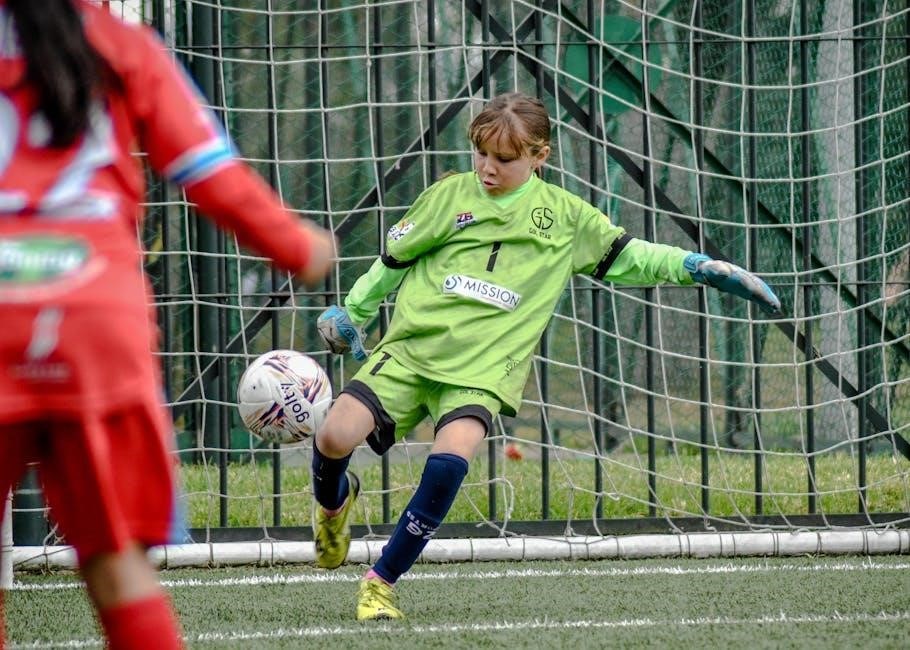
Youth goalie glove sizing differs significantly from adult sizes, accounting for smaller hand dimensions and developing growth. Unlike adult sizing focused solely on circumference, youth sizing often incorporates age-based guidelines, though individual hand size remains paramount.
Generally, youth gloves range from size 3 to 6, but variations exist. It’s vital to measure the child’s hand accurately, as relying solely on age can lead to improper fit. Prioritize comfort and dexterity; gloves shouldn’t restrict movement or feel overly bulky, impacting their ability to react quickly.
Differences Between Adult and Youth Sizing

Adult goalie glove sizing primarily centers around hand circumference and palm width, assuming fully developed hand structures. Conversely, youth sizing acknowledges ongoing hand growth, necessitating a more flexible approach. Youth gloves typically feature shorter finger lengths and narrower palm widths compared to equivalent adult sizes.
Furthermore, youth gloves often prioritize a more forgiving fit, accommodating growth spurts. Adult gloves are designed for a precise, performance-oriented fit. Age-based charts are more common for youth sizing as a starting point, while adult sizing relies heavily on precise measurements.
Age-Based Sizing Guidelines
Generally, youth goalies aged 8-11 often require sizes ranging from 5 to 7, while those aged 12-15 typically fit into sizes 7 to 8.5. However, these are broad estimations; individual hand size varies significantly within age groups. It’s crucial to prioritize hand measurement over age alone.
Consider that younger goalies may benefit from slightly larger gloves to allow for growth, but avoid excessive looseness. For teens, a more precise fit is essential for optimal performance. Always cross-reference age-based suggestions with actual hand circumference measurements for the most accurate sizing.
Women’s Goalie Glove Sizing
Women often have smaller hand sizes and different hand shapes compared to men, necessitating specific considerations when selecting goalie gloves. Standard sizing charts may not always be accurate, leading to ill-fitting gloves that compromise performance.
It’s recommended that women prioritize hand circumference measurement and consult brand-specific charts designed for women’s hands, if available. A snug, yet comfortable fit is crucial, allowing for dexterity and control. Don’t hesitate to size down from typical men’s sizes, and carefully review fit feedback in online reviews.
Specific Considerations for Women’s Hands
Women’s hands generally exhibit a higher hand-to-palm ratio and often possess narrower palms than men’s hands. This anatomical difference impacts glove fit, potentially causing bulkiness or restricted movement with standard sizing. Prioritize gloves designed with a contoured palm to accommodate a woman’s hand shape.
Consider gloves with adjustable wrist straps to fine-tune the fit and ensure a secure feel. Pay close attention to finger length; gloves with excessively long fingers can hinder dexterity. Reading reviews specifically mentioning fit for women is highly recommended, offering valuable insights.
Glove Fit Preferences: Loose vs. Tight
The ideal glove fit is subjective, varying based on personal preference and playing style. A tighter fit enhances feel and control, providing superior ball contact and responsiveness, but can restrict hand movement. Conversely, a looser fit offers greater flexibility and comfort, facilitating quicker reactions.
However, excessive looseness compromises control and increases the risk of the ball slipping. Beginners often benefit from a slightly looser fit, while experienced keepers may prefer a snug, performance-oriented feel. Consider your comfort level and prioritize a fit that allows for natural hand articulation.
The Impact of Fit on Performance
Proper glove fit directly influences a goalkeeper’s ability to make saves effectively. A well-fitted glove maximizes ball control, enabling secure catches and confident handling, reducing fumbles and rebounds. Ill-fitting gloves – too loose or too tight – hinder dexterity and reaction time.
A snug fit enhances tactile feedback, allowing keepers to ‘feel’ the ball, while adequate padding protects hands during impact. Conversely, a restrictive fit limits movement, impeding quick saves. Choosing the correct size and cut is paramount for optimal performance and injury prevention on the field.
Common Sizing Issues and Solutions
Frequently, goalkeepers encounter gloves that are either too large or too small, impacting performance. Oversized gloves reduce control and tactile feedback, leading to missed catches and difficulty handling the ball securely. Conversely, gloves that are too tight restrict hand movement, hindering quick reactions and causing discomfort.
Solutions include consulting brand-specific size charts, reading reviews regarding fit (loose or tight), and considering a smaller size if uncertainty exists. For persistent issues, exploring custom-made gloves tailored to individual hand dimensions offers a precise, albeit more expensive, solution.
Gloves That Are Too Big
When gloves are excessively large, goalkeepers experience diminished control and a reduced ability to effectively handle the ball. The extra space within the glove compromises tactile feedback, making it difficult to accurately gauge the ball’s position and secure a firm grip. This can lead to fumbled catches and increased vulnerability during saves.
To remedy this, consider downsizing to a smaller glove size, or adding padding to create a snugger fit. Ensure the fingers aren’t swimming in the fingertips, and the palm isn’t overly spacious. A secure fit is paramount for optimal performance.
Gloves That Are Too Small
Conversely, gloves that are too small severely restrict hand movement and dexterity, hindering a goalkeeper’s ability to react quickly and make dynamic saves. A constricted fit can cause discomfort, fatigue, and even blisters, impacting performance over extended periods. Limited finger flexibility compromises the ability to properly close around the ball.
If experiencing this, explore sizing up to a larger glove. Consider gloves with more flexible materials or a wider palm width. Prioritize comfort and unrestricted movement to ensure optimal hand function during gameplay.
Using Printable Hand Size Charts
Printable hand size charts offer a convenient, cost-effective method for determining your initial glove size. Numerous online resources provide downloadable charts, typically ranging from size 3 to 12. Ensure the chart is printed to actual size – verify with a ruler! Place your dominant hand flat on the chart, aligning your knuckles with the indicated lines.
This provides a preliminary size estimate; however, remember that brands vary. Combine this measurement with brand-specific size charts and, crucially, review feedback regarding fit – noting if gloves tend to run loose or tight.
Finding Reliable Printable Charts
Locating trustworthy printable charts requires a discerning approach. Brand websites, like Stanno, frequently offer accurate charts tailored to their glove models. Reputable sporting goods retailers often provide downloadable sizing guides as well. Avoid charts from unknown or unverified sources, as inaccuracies can lead to incorrect sizing.
Prioritize charts that clearly indicate the measurement units (inches or centimeters) and provide detailed instructions. Cross-reference multiple charts from different brands to gain a broader perspective and improve the accuracy of your initial size estimate.
How to Use a Printable Chart Effectively
Ensure the printed chart is scaled correctly – verify the test square measures accurately with a ruler before measuring your hand. Place your hand flat on the chart, ensuring your fingers are extended but relaxed. Measure the circumference around your knuckles, excluding the thumb, as instructed.
Compare your measurement to the chart’s size guide, noting the corresponding glove size. Remember that sizing can vary between brands, so always consult the specific chart for the manufacturer you’re considering. Consider repeating the measurement several times for accuracy.
Considering Palm Width and Finger Length
Palm width significantly influences glove fit, particularly in the fingers; a wider palm may necessitate a larger size, even if hand circumference suggests otherwise. Conversely, shorter fingers might benefit from a slightly smaller size to avoid excess space.
Assess your finger length relative to the glove’s finger saves. If your fingers extend significantly beyond the saves, consider a glove with longer fingers or a different cut. Prioritize a snug, yet comfortable, fit that allows for natural hand movement and optimal ball control.
The Role of Palm Width in Sizing
Palm width is a crucial, often overlooked, element in achieving the perfect goalie glove fit. A wider palm generally requires a glove with a larger overall size, even if hand circumference measurements indicate a smaller size. Ignoring palm width can lead to a constricted feel, hindering dexterity and comfort.
Conversely, a narrow palm within a larger glove can result in excessive space and reduced control. Accurate measurement, combined with brand-specific sizing charts, is essential. Consider gloves designed for wider or narrower hands if standard sizes don’t accommodate your unique hand shape.
Adjusting for Longer or Shorter Fingers
Finger length significantly impacts glove fit and performance, often requiring adjustments beyond standard sizing. Goalkeepers with longer fingers may need to size up to ensure complete fingertip coverage and prevent binding, which restricts movement and control. Conversely, shorter fingers benefit from sizing down to avoid excess material.
Consider gloves with adjustable wrist straps and finger saves to fine-tune the fit. Reviews often mention whether a glove runs long or short in the fingers, providing valuable insights. Prioritizing comfort and a secure feel is paramount for optimal performance.
The Importance of Glove Reviews
Glove reviews are an invaluable resource when determining the correct size, offering real-world feedback on fit and performance. Pay close attention to comments regarding whether a particular model runs true to size, large, or small. Seek out reviews specifically mentioning finger length and palm width experiences.
Analyzing this feedback can reveal consistent sizing trends, helping you make an informed decision. Look for reviewers with similar hand characteristics to your own. Don’t solely rely on brand size charts; user experiences provide crucial context.
Analyzing Fit Feedback in Reviews
When dissecting glove reviews, focus on recurring themes regarding fit. Does a significant number of users report the gloves feeling “loose” or “tight”? Note any mentions of specific sizing discrepancies – for example, a glove being a half-size or full-size too small.
Pay attention to comments about palm construction impacting fit; negative cuts often feel snugger. Filter reviews by hand size if possible, seeking opinions from users with similar measurements. Consider the reviewer’s experience level; professional goalkeepers may have different preferences.
Professional Goalie Glove Sizing Tips
Experienced goalkeepers often prioritize a snug, yet not restrictive, fit. They suggest measuring your dominant hand multiple times throughout the day, as hand size can fluctuate. Many pros recommend erring on the smaller side, as gloves stretch with use, particularly the latex palm.
Consider your playing style; a tighter fit enhances feel and control, while a looser fit offers more protection. Don’t solely rely on brand size charts; individual glove models vary. Finally, professional advice stresses the importance of trying gloves on whenever possible.
Advice from Experienced Goalkeepers
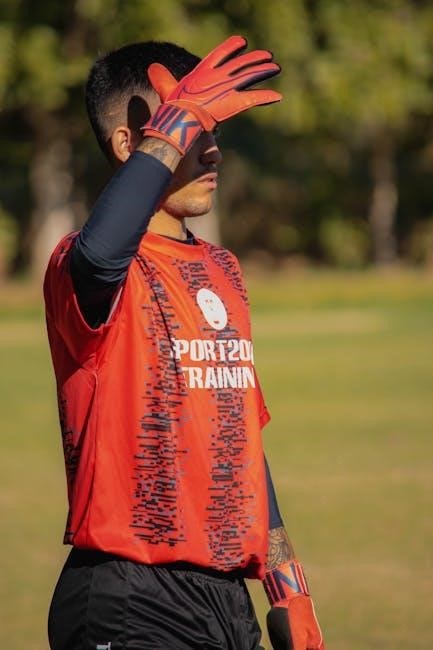
Seasoned goalkeepers consistently emphasize the value of a personalized fit, often deviating from standard size charts. They recommend prioritizing feel and dexterity over simply matching a measurement. Many suggest initially choosing a slightly smaller size, anticipating latex stretching during gameplay.
Furthermore, experienced players advise considering palm construction – negative cuts generally require a tighter fit. They also stress the importance of breaking in gloves gradually to avoid discomfort and maximize performance. Ultimately, they advocate for prioritizing comfort and confidence in your chosen size.
Understanding Palm Construction and Sizing
Palm construction significantly influences how a goalie glove fits and performs. Negative cut gloves, where the palm extends under the fingers, typically require a snugger fit to maintain control. Positive cut gloves, with seams on the fingers, offer a more relaxed feel and often accommodate wider hands.
Roll finger designs, featuring a wrapped palm extending over the fingers, demand precise sizing as they offer maximum latex contact. Understanding these differences is crucial; a negative cut might necessitate sizing down, while a positive cut could benefit from a slightly looser fit.
Negative Cut vs. Positive Cut vs. Roll Finger
Negative cut gloves feature internal stitching, offering a tight, second-skin feel and enhanced ball control, but require a precise fit—often sizing down is recommended. Positive cut gloves have external stitching, providing a more traditional, comfortable fit, suitable for wider hands and generally allowing for standard sizing.
Roll finger construction wraps the palm around the fingers, maximizing latex contact and offering superior cushioning, but demands an extremely snug fit; sizing down is almost always necessary. Choosing depends on preference and hand shape, impacting the overall glove experience.
Latex Thickness and Sizing
Latex thickness significantly influences glove fit and feel; thicker latex (4mm+) provides superior cushioning but can feel bulkier, potentially requiring a slightly larger size for comfortable articulation. Thinner latex (3mm or less) offers enhanced ball control and a closer fit, often necessitating a snugger, potentially smaller size.
Consider the trade-off between protection and feel when selecting latex thickness. A thicker palm might demand half a size up, while a thinner palm could benefit from sizing down. Always prioritize a secure, unrestrictive fit for optimal performance.
How Latex Thickness Affects Fit
Latex thickness directly impacts the internal volume of a goalie glove, influencing how snugly it fits your hand. Thicker latex creates more padding, effectively increasing the glove’s overall size and potentially leading to a looser fit if you maintain your usual size.
Conversely, thinner latex minimizes bulk, resulting in a tighter, more responsive feel. This often means you might need to size up to accommodate the reduced padding and maintain adequate comfort and dexterity. Prioritize a fit that allows for natural hand movement without excessive looseness.
Custom Goalie Gloves: A Tailored Solution
Considering custom goalie gloves becomes essential when standard sizing consistently fails to deliver an optimal fit, particularly for individuals with uniquely shaped hands or specific preferences. This premium option allows for precise measurements and adjustments, ensuring a glove perfectly contoured to your hand’s dimensions.
While representing a higher investment, custom gloves eliminate common fit issues like excessive palm space or constricted fingers. They offer unparalleled comfort, control, and performance, making them ideal for serious goalkeepers seeking a truly personalized experience and superior protection.
When to Consider Custom Gloves
Evaluate custom gloves if you’ve exhaustively tried standard sizes from multiple brands without success, experiencing persistent issues like slipping, restricted movement, or discomfort. Individuals with disproportionately long or short fingers, or unusually wide palms, often benefit significantly from a tailored fit.
Competitive goalkeepers prioritizing peak performance and those with hand injuries requiring specialized support should also explore custom options. While more expensive, the enhanced control, comfort, and protection can justify the investment, ultimately improving your game and minimizing risk of further injury.
Return Policies and Exchange Options
Prior to purchasing goalie gloves, meticulously review the retailer’s return and exchange policies. Given the variability in sizing between brands, a generous return window is crucial, allowing you to test the gloves thoroughly during training. Understand if you’re responsible for return shipping costs and any restocking fees.
Confirm whether exchanges are permitted for different sizes or models, and the timeframe for initiating a return or exchange. Keep all original packaging and proof of purchase. Knowing your rights as a buyer empowers informed decisions, ensuring a satisfactory fit.
Knowing Your Rights as a Buyer
As a consumer, you possess specific rights when purchasing goalie gloves online or in-store. Retailers are legally obligated to provide accurate product descriptions, including sizing information. Misleading claims or inaccurate charts can be grounds for a return or refund.
Familiarize yourself with consumer protection laws in your region. Document all communication with the seller regarding sizing issues. A clear understanding of your rights empowers you to confidently address any discrepancies and secure a properly fitting pair of gloves, enhancing your performance.
Sizing for Different Glove Types (Match vs. Training)
Consider the intended use when selecting goalie gloves, as sizing needs can differ between match and training models. Match gloves often prioritize a snug, precise fit for optimal feel and control during games, potentially requiring a slightly smaller size.
Training gloves, conversely, may benefit from a more relaxed fit to accommodate thicker padding and allow for greater hand movement during repetitive drills. Don’t assume one size fits all; evaluate each glove type individually, prioritizing comfort and functionality for its specific purpose.
Differences in Fit Requirements
Match gloves demand a tighter fit, enhancing ball control and feel – a crucial element during competitive play. This precision often means selecting a size that feels snug, minimizing excess space within the glove. Conversely, training gloves prioritize comfort and protection.
A slightly looser fit allows for greater hand mobility during drills and reduces fatigue. The increased padding in training gloves also necessitates a bit more room. Therefore, understanding these distinctions is vital for optimal performance and injury prevention.
Historical Context of Goalie Glove Use
Historically, goalkeepers didn’t utilize gloves; early soccer featured harder balls, yet protection wasn’t prioritized. The evolution of the game, alongside increasing ball speeds and materials, gradually necessitated hand protection. Early gloves were rudimentary, offering minimal padding and varying significantly in size and construction.
Standardization of sizing emerged much later, driven by advancements in manufacturing and a growing understanding of biomechanics. Today’s sophisticated sizing charts reflect decades of refinement, aiming to optimize both protection and performance for the modern goalkeeper.
The Evolution of Goalie Glove Sizing
Initially, goalie glove sizing was largely arbitrary, relying on general hand measurements and limited brand consistency. Early attempts at standardization focused on palm width, but failed to account for variations in finger length and hand circumference. The introduction of more precise measurement techniques, like knuckle circumference, marked a significant step forward.
Modern sizing charts now incorporate multiple dimensions and brand-specific nuances, acknowledging that a “size 8” can differ considerably between manufacturers. The rise of custom gloves further emphasizes the importance of personalized fit, moving beyond generic sizing conventions.